
The Kabu Mansabah Initiative | ScanAfrik Skills Empowerment
Coloniality of Power and Leadership in Africa
Coloniality of Power and Leadership

The concept of coloniality of power helps explain why the effects of colonial rule did not end with political independence. Across many postcolonial societies, the psychological legacy of colonialism continues to shape institutions, social values, and personal identity. This legacy operates through embedded hierarchies of race, culture, knowledge, language, and status, producing lasting postcolonial power dynamics that influence how people see themselves and others. In this sense, postcolonial psychology is deeply connected to systems of authority, belonging, and legitimacy.

For the colonially trained leader, this often results in a leadership identity built around closeness to Western ideals. Dress, language, religion, education, etiquette, and worldview become markers of prestige and power, while indigenous knowledge, languages, and cultural practices are pushed aside or treated as lesser. This form of cultural conditioning reinforces internalised colonialism, where the colonised subject begins to measure worth through foreign standards. The result is often a fractured self: a leadership mindset that admires the Westernised self as modern and civilised, while seeing the indigenous self as backward. This split creates both an inferiority complex and a compensatory superiority complex, shaping how authority is performed and justified.

In this way, decolonial thought becomes essential to understanding the modern crisis of leadership psychology in postcolonial contexts. The issue is not only political independence, but also the unresolved identity and authority struggle left behind by colonial systems.

Leadership and Organisational Behaviour: The Persistence of Colonial Mentality

In studies of postcolonial leadership, scholars have shown that many leadership and management structures in Africa continue to reflect colonial assumptions, even when they are presented as local or African. What appears to be indigenous leadership is often still filtered through Western institutional logic. This is one of the clearest signs of colonial mentality within modern organisations. The language may be African, but the underlying values often remain tied to the elite leadership culture established through colonial education and administration.

In practice, this means that the colonially trained leader may reproduce rigid, bureaucratic, paternalistic, or authoritarian forms of rule, even in societies where older systems valued dialogue, relational accountability, and communal responsibility. Such a leader often associates authority with rank, titles, foreign certification, and public image. Here, power and status become more important than service, shared decision-making, or community trust. Leadership is reduced to performance, shaped by prestige and power, instead of collective stewardship.

This pattern reveals how deeply postcolonial power dynamics structure modern institutions. The colonial school system did more than train administrators; it also produced a particular leadership mindset. It rewarded obedience to external models, admiration for Western norms, and distance from local knowledge systems. Over time, this produced leaders who may appear confident yet remain trapped between superiority and inferiority complexes—seeking validation from foreign standards while asserting control over local populations.

Understanding this tension is central to decolonising leadership. A meaningful transformation of leadership and domination requires more than cosmetic reforms. It calls for confronting internalised colonialism, questioning inherited notions of legitimacy, and rethinking what counts as knowledge, authority, and excellence. Only then can postcolonial leadership move beyond imitation and recover forms of governance rooted in context, dignity, and collective responsibility.
Superiority and Inferiority Complexes: Psychological Duality of Post-Colonial Leadership

Implications: Leadership Failure, Institutional Weakness, and Identity Conflict

The psychological legacy of colonialism, embodied in the superiority-inferiority duality, has tangible consequences for governance and institutional development. Some of the key implications include:

  • Weak Institutions and Governance Failure: When leadership is culturally and psychologically alienated from local realities, institutions tend to replicate colonial bureaucratic forms rather than evolve contextually. As a result, governments struggle to deliver services effectively, respond to citizen needs, or harness indigenous social capital. This helps explain why many postcolonial African states, including Sierra Leone, grapple with institutional fragility, ineffective governance, and development stagnation.
  • Social Alienation and Cultural Erosion: The marginalisation of indigenous languages, practices, and worldview undermines communal identity and erodes social cohesion. Citizens may feel disconnected from leaders who operate in alien cultural frames. Over time, this contributes to a broader alienation of the populace from state institutions.
  • Leadership Crisis Rooted in Identity Conflict: What is often labelled “leadership failure” is sometimes less about lack of skill or resources and more about a fractured psyche. Leaders struggling with dual identities may lack authenticity, moral authority, or the ability to engage meaningfully with their societies. Thus, most leadership remains performance-oriented but lacks grounded legitimacy from the national social structure.
  • Perpetuation of Neocolonial Dependence: Excessive reliance on foreign advisers, imported policies, and global validation perpetuates a form of intellectual neocolonialism. This weakens the possibility of a genuinely decolonised governance model rooted in local needs, participation, and cultural identity.

Thus, the psychological scars of colonial education are not abstract; they shape the lived reality of governance, identity, and development in Sierra Leone.

Toward Decolonised Leadership: Pathways to Psychological and Institutional Liberation

Recognising the problem is the first step. But what would a decolonised leadership psyche look like in Sierra Leone — and by extension in postcolonial African contexts more broadly?

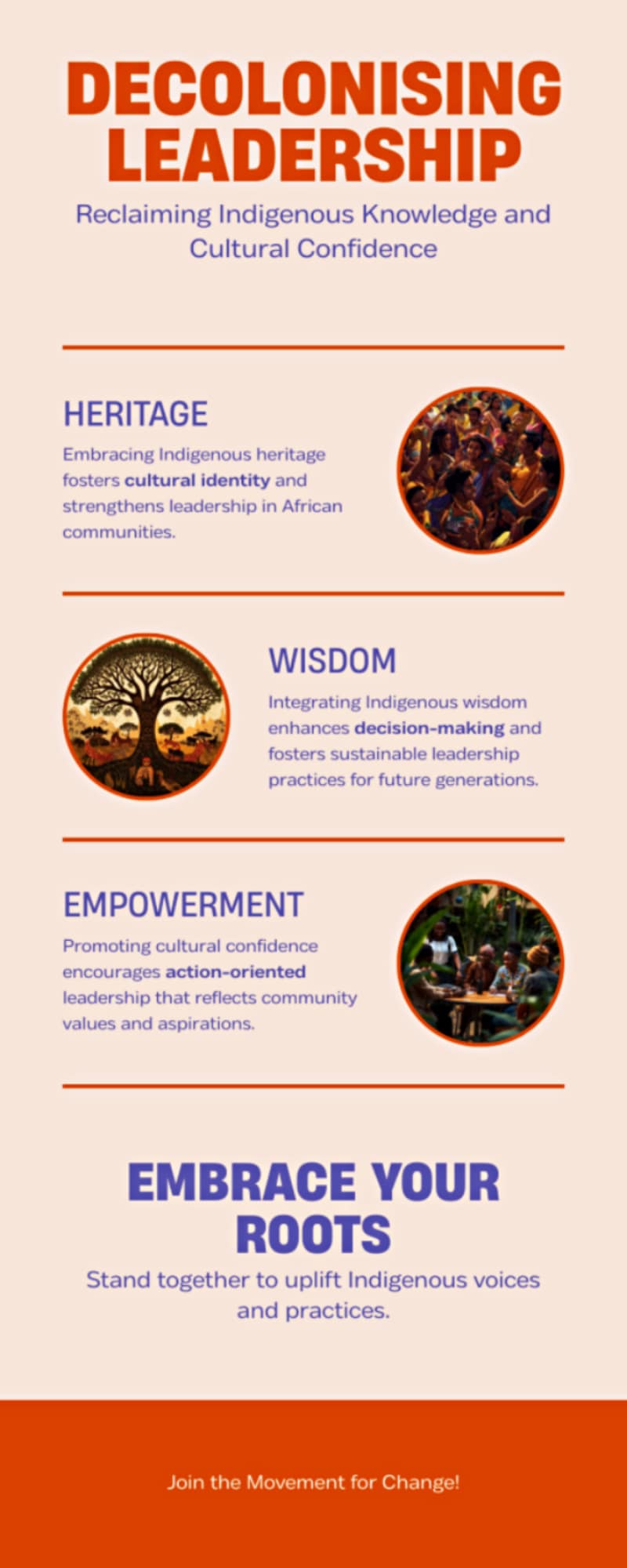
Poster on Decolonising minds for Development
Poster on Decolonising Leadership minds as a path to Development

Reclaiming Indigenous Epistemologies and Cultural Confidence

Transforming leadership in postcolonial nations like Sierra Leone demands more than rhetoric; it requires a fundamental shift in perceptions of knowledge, culture, and legitimacy. Genuine change means reclaiming indigenous epistemologies and valuing local languages, traditions, and systems as contemporary tools for governance and development. The current elitist mindset, shaped by colonial education, undervalues these resources and must be dismantled.

Education is central to this process. African curricula have long mirrored European models, perpetuating cultural alienation and dependency. True reform involves integrating indigenous knowledge, oral traditions, and local languages at all levels of education, making learning relevant and empowering for African contexts. Education shapes identity and power, so reclaiming it is both strategic and spiritual.

Ultimately, rebuilding cultural confidence is about sovereignty nostalgia, enabling authentic and accountable leadership rooted in the values of the people.

Prioritising Wisdom, Service, and Community Well-being Over Prestige

In Sierra Leone’s postcolonial context, leadership should shift from personal status and external validation to service and community well-being. Leaders need not be defined by titles or foreign approval but by their connection with people’s real needs. Traditional African leadership emphasised stewardship and moral integrity over dominance, prioritising guidance and communal harmony. Reviving these principles means integrating indigenous values into modern leadership models, supporting dignity and social cohesion without rejecting progress.

A leader who prioritises service over personal gain actively involves the community as partners in governance, rather than treating them as passive recipients. This participatory approach cultivates mutual trust, supports collaborative decision-making, and leads to policies that accurately reflect the needs of the population. By engaging with communities communicating in local languages, respecting cultural traditions, and maintaining open channels of dialogue, leaders can develop comprehensive policies that address both apparent and underlying challenges. Such engagement contributes to narrowing the gap between governing authorities and grassroots populations.

When leadership focuses on community welfare, national development becomes more inclusive. Economic growth, education, public health, and infrastructure initiatives reflect citizens’ needs rather than donor or elite interests, strengthening cohesion and local resilience. The path to sustainable, decolonised leadership is built on service, not prestige; by putting collective well-being first, Sierra Leone and other postcolonial nations can foster leaders with cultural confidence, moral authority, and real commitment to change.
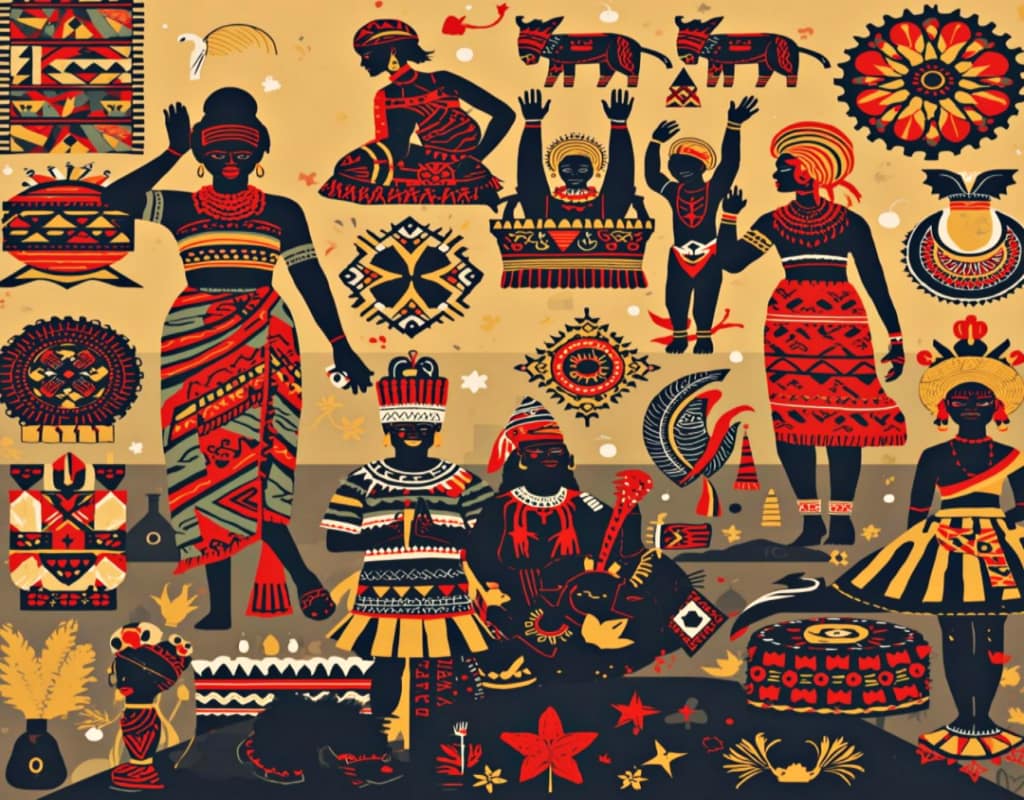

mosaic on colonial disruptions on Traditional governance systems in Africa
Disruption of Traditional Systems
Institutional Reforms Anchored in Local Contexts

The development and organisation of political, economic, and social institutions should reflect the social, cultural, and linguistic diversity present within Sierra Leonean society. Rather than replicating colonial bureaucratic models, it is advisable to implement hybrid governance strategies that integrate formal state mechanisms with traditional community-based practices. Given the varied beliefs and perspectives within the population, reforms are most effective when structured around efficient decentralised governance, enabling residents to serve in their regions of origin and allowing decentralised institutions to plan development initiatives within the broader national policy framework. Successful implementation requires strong political will, inclusive public engagement, and deliberate measures to decolonise state institutions. Over time, such reforms have the potential to address and dismantle enduring aspects of colonial power structures.

Theoretical Framing: Postcolonial Psychology, Double Consciousness, and Leadership Identity

A comprehensive understanding of these dynamics can be achieved by engaging with theoretical perspectives advanced by postcolonial scholars. The contributions of Frantz Fanon are particularly pertinent; in works such as Black Skin, White Masks, Fanon examines the psychological ramifications of racialised colonial domination, including manifestations of internalised inferiority, alienation, and the pursuit of external validation.

Fanon’s notion of “colonial alienation” is evident in the dual psychological realities experienced by many postcolonial leaders, an identity split between aspirations for recognition in the coloniser’s world and feelings of shame or devaluation towards one’s own culture. This psychological configuration often endures beyond political independence, continuing to influence leadership behaviours, organisational cultures, and social interactions across generations.

In the field of organisational studies, academics like Stella M. Nkomo have applied postcolonial and anti-colonial methodologies to critically evaluate conventional (predominantly Western) leadership and management theories. Their analyses underscore the inherent contradictions in defining “African leadership” through epistemologies that originate from colonial or Western paradigms, and advocate for reconstructing leadership models that reflect African contexts and realities.

In the context of Sierra Leone, this theoretical framework elucidates the continued influence of colonial governance practices among leaders following independence, as well as the difficulties encountered by reform initiatives that function within unaltered inherited cognitive paradigms.

In the context of Sierra Leone, this theoretical framework elucidates the continued influence of colonial governance practices among leaders following independence, as well as the difficulties encountered by reform initiatives that function within unaltered inherited cognitive paradigms.

The colonial legacy in Sierra Leone extends beyond historical and institutional dimensions; it is also deeply psychological, embedded in identities and societal hierarchies. The Western educational system instituted by missionaries and colonial administration not only produced clerks and intermediaries but also reconstituted social classes, reframed power structures, and instilled values privileging Western norms, languages, and knowledge systems above indigenous alternatives.

This process fostered what may be termed the “colonial psyche” of leadership—a dichotomy characterised by both superiority complex (emphasising prestige, performance, and status) and inferiority complex (exhibiting cultural insecurity and reliance on external affirmation). Such legacies have contributed to institutional weaknesses, shortcomings in leadership, social estrangement, and ongoing intellectual neocolonialism.

Accordingly, decolonising leadership across psychological, identity, institutional, and educational dimensions is imperative for realising authentic sovereignty, social cohesion, and development grounded in cultural legitimacy. For Sierra Leone and similar postcolonial societies, true liberation is as much a psychological endeavour as it is a political one. Progress begins with reclaiming identity, restoring dignity, and redefining leadership fundamentally as service rather than as performance.

Scroll to Top